Daily life in Serbia is shaped less by anything dramatic than by a consistent rhythm. Mornings start in cafés. Lunch is the heaviest meal. The supermarket gets the basics, but fresh food still comes from open markets you can walk to. Healthcare, schooling and tax matter to anyone making the move, and the practical numbers for each are surprisingly favourable. What follows covers the daily rhythm honestly, in the categories that come up most often when families are deciding whether to relocate here.
Schools
International schools cluster in Belgrade, with a smaller cohort in Novi Sad. The major curricula (British, IB, French and German) have presences going back decades. The International School of Belgrade (IB) and the Anglo American School of Belgrade between them serve much of the diplomatic and corporate community. The British International School and Chartwell cover the British curriculum. The École Française de Belgrade and the Deutsche Schule Belgrad serve their respective national communities. Most schools run a September-to-June calendar. Annual fees range from about €10,000 at the smaller schools to around €25,000 at the largest international institutions, well below the equivalents in London, Geneva or Frankfurt. Local public schools are free, well-regarded for the early years, and many bilingual families use them through primary before transitioning to an international school for secondary. Serbia's universities, particularly the University of Belgrade and University of Novi Sad, produce strong technical and medical graduates and have growing English-taught programmes.
Belgrade — the city where most international schools cluster.
Markets and daily life
The week in Serbian cities revolves around fresh food. Every neighbourhood has at least one daily market. In Belgrade, Kalenić in the central district is the best-known, with Bajloni and Zeleni Venac as close runners-up. In Novi Sad, the Riblja Pijaca near the centre and the Saturday market on Bulevar oslobođenja serve the same function. The markets open at first light and are run by farmers and small producers who know their regulars. Supermarkets carry European and local brands, but the markets are where the year is read: strawberries in May, peaches and apricots in July, plums and figs in September, walnuts and pumpkins in October. A weekly grocery shop for a family of four runs around €80 to €120. A serious restaurant dinner with wine for two costs roughly €80 to €120 in Belgrade, less elsewhere. The pricing surprises people from London or Zurich for the first year, and then becomes simply the texture of daily life.
Skadarlija, Belgrade's bohemian street and eating quarter.
Tax and residency
Serbia operates one of the simplest and lowest tax regimes in mainland Europe. Personal income tax is a flat 10% on most income types. Capital gains are taxed at 15%, and corporate income at the same 15%. There is no wealth tax. Inheritance and gifts between first-line relatives (children, parents, spouse) are entirely exempt. Annual property tax exists but is modest, scaling to around 0.4% of declared value for residential property and almost always lower in practice. VAT is 20% standard, 10% for essentials. For non-EU citizens, temporary residence based on real estate ownership is straightforward: any owner of a registered property qualifies, the permit is renewed annually, and after three years of continuous residence it converts to permanent residence. EU citizens face fewer formalities throughout. Serbian citizenship by naturalisation is available after eight years of permanent residence, and the resulting passport offers visa-free travel to most OECD countries. None of these terms is unusual on paper; what is unusual is having them all stack on a country in central-southern Europe at western Balkan prices.
Weekend Serbia
Most of what makes Serbia distinct is outside the cities. Within three hours of Belgrade or Novi Sad you can be at a working monastery, a wine region, a ski resort, the Iron Gates of the Danube, or a national park with a gorge cut nine hundred metres deep. None of this is heavily branded or expensive. Weekend Serbia has stayed local-feeling in a way that most of western Europe has long since lost. What follows is the short list of places people who live here actually go.
Vineyards on Fruška Gora, twenty minutes from Novi Sad.
Fruška Gora
Fruška Gora is the long, low mountain range running east-west through Vojvodina, twenty minutes from Novi Sad. It is a national park, but its character comes from what humans have planted on it: vineyards going back to Roman times, sixteen working Orthodox monasteries dating mainly to the 15th-17th centuries, and a quiet circuit of villages and cellar doors. The wines are honest, mostly small-batch, and increasingly worth attention. A weekend tasting tour of half a dozen wineries is one of Serbia's most pleasant short trips.
The Zlatibor plateau in summer, southwestern Serbia.
Zlatibor
Zlatibor is the most popular mountain destination in the country, two and a half hours south of Belgrade. The plateau sits between 700 and 1500 metres and is broad rather than dramatic, with rolling pastures, pine forests and the highest concentration of holiday homes in Serbia. Skiing at the Tornik resort runs from December into April. Summer brings hiking, mountain biking, and the eccentric Šargan Eight narrow-gauge railway. Air quality and silence are the actual reasons people come.
Pančić's Peak, the highest point of Kopaonik.
Kopaonik
Kopaonik is Serbia's main alpine resort, in the country's centre-south, peaking at 2017 metres at Pančić's Peak. It has the longest, most reliable ski season in the western Balkans, the largest groomed area in the country, and the best mountain hotels. Summers turn it into a hiking and mountain-bike destination, with the national park covering most of the massif. Kopaonik is far enough from any major city (about three and a half hours from Belgrade) that it feels like a proper retreat. The cost of a week here for a family is a fraction of the equivalent in the French or Austrian Alps.
Mitrovac viewpoint, Tara National Park.
Tara National Park
Tara, on the western border with Bosnia, is the wildest of Serbia's mountains. The terrain is karst gorges, beechwoods and limestone cliffs falling sharply to the emerald Drina river. The Drina canyon is one of Europe's deepest, dropping over a thousand metres in places. Bears, wolves and the rare Pančić spruce survive in the deep park. Activities are walking, rafting, photography, and the kind of quiet you get only at altitude in a sparsely populated country. The drive from Belgrade is around four hours, and the journey is most of the experience.
Veliki Kazan, the great cauldron of the Đerdap gorge.
Đerdap (Iron Gates)
The Đerdap National Park follows the Danube along the country's northeastern border with Romania, where the river cuts a hundred-kilometre gorge through the southern Carpathians. The cliffs reach three hundred metres above the water in places. Lepenski Vir, an 8000-year-old fishing settlement on the Danube, is one of Europe's oldest human sites and has its own museum on the water. Cruise the gorge by small boat in summer, or drive the panoramic road that hugs the cliffs. Đerdap is best done as a weekend rather than a day.
Lake Palić, a Habsburg-era spa retreat near Subotica.
Lake Palić
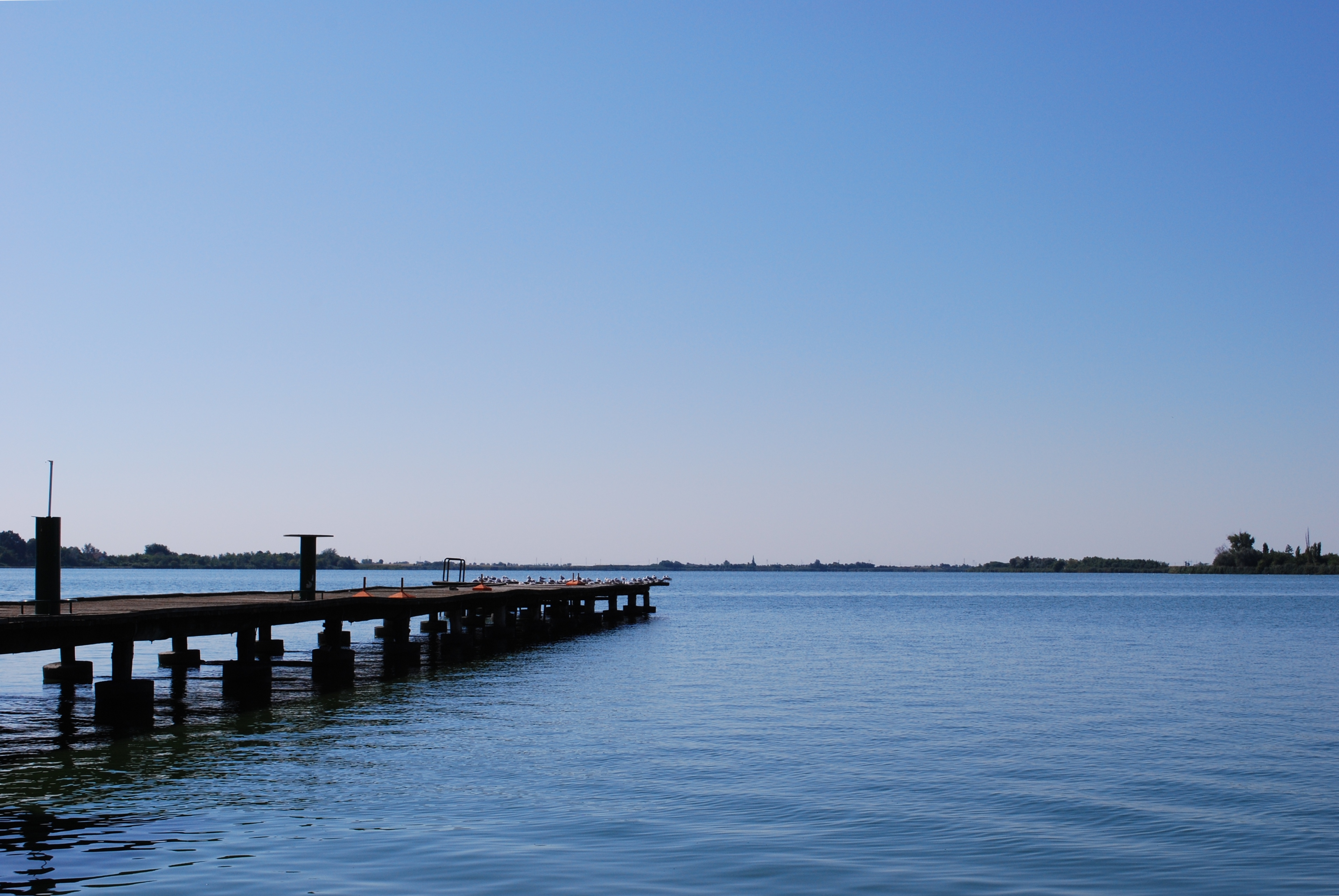
Palić is a shallow lake outside Subotica, ten minutes from the Hungarian border. The art nouveau resort architecture around its shore was built when this was a fashionable Habsburg-era spa destination, and most of it has been carefully restored. The lake is a wellness, swimming and cycling destination, with the European Film Festival of Palić each summer as the headline cultural event. For relocators based in Vojvodina, it functions as a local Sunday-afternoon outing.
Ada Ciganlija, Belgrade's urban island and city beach.
Ada Ciganlija
Ada Ciganlija is Belgrade's urban island and city beach. A peninsula formed by a Sava river dam, with a several-kilometre swimming shore, sports fields, restaurants and cycle paths. In the summer months it absorbs much of the city: tens of thousands of swimmers, paddleboarders, weekend-runners and barbecue picnics across its grasses. It is not a luxury destination, but it is the place that explains why Belgraders insist their landlocked city has a coastline.